Welcome back to our ongoing monthly series here at Takezo Trading, where we unpack and demystify central bank interest rates, government bond yields, and yield curves. Our goal is simple: Provide clear, actionable, and insightful analysis to help you understand the financial landscape shaping global currency markets.
Central Bank Interest Rates: June Overview
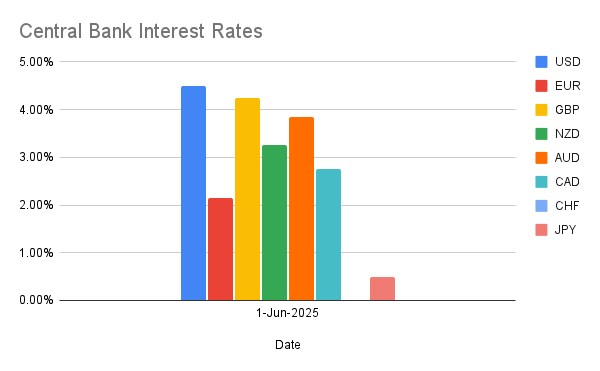
As June comes to a close, central banks worldwide have continued navigating uncertain economic waters, balancing inflation concerns with growth prospects. Here’s a quick overview:
- Federal Reserve (US) continues its measured approach. The current interest rate trajectory indicates cautious optimism towards economic stabilization.
- European Central Bank (ECB) remains vigilant on inflation, maintaining a moderate yet firm stance.
- Bank of England (BoE) stays relatively hawkish, reflecting persistent inflationary pressures within the UK.
- Reserve Bank of Australia (RBA) and Bank of Japan (BoJ) exhibit cautious stances, keeping rates accommodative to support economic stability.
The US Yield Curve: Signs of Normalization
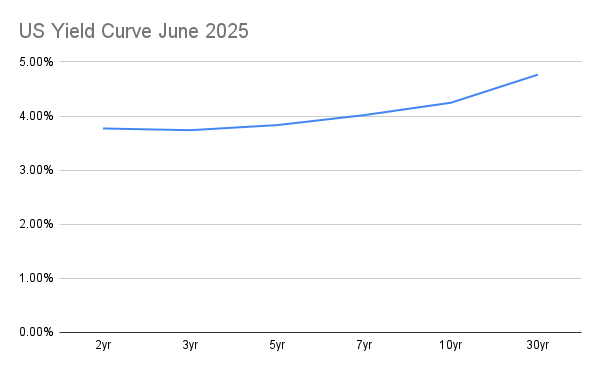
The yield curve in the United States—a key barometer for economic health—is beginning to show clearer signs of normalization. Traditionally, a steeper yield curve (higher yields for longer maturities compared to short-term maturities) indicates positive economic expectations.
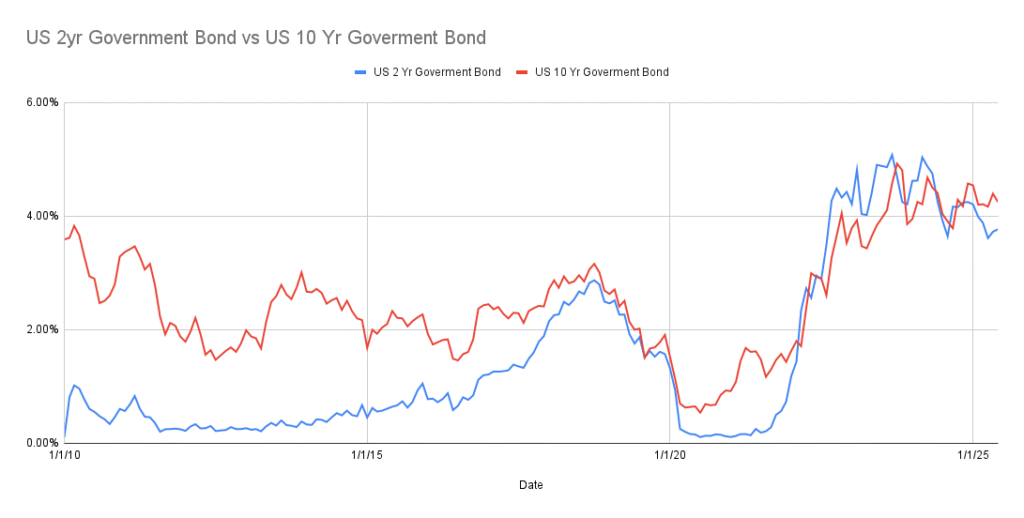
- The spread between the 2-year and 10-year yields has been particularly indicative, suggesting investor sentiment sees growth stabilizing over the medium term.
- Meanwhile, the difference between the US 10-year and 30-year yields has remained relatively stable, underscoring a balanced long-term economic outlook.
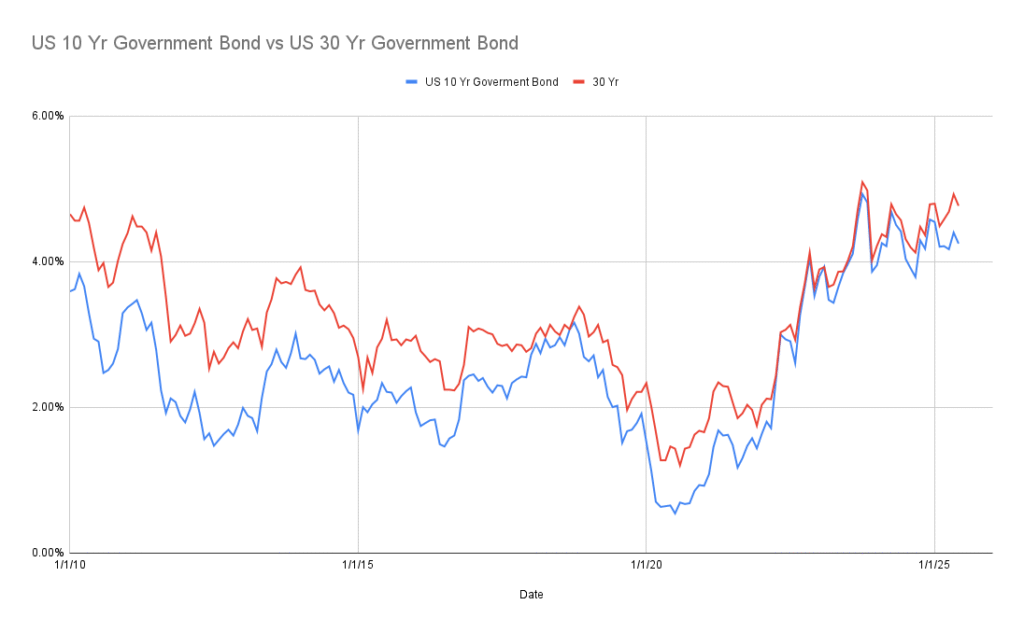
These developments point to diminishing recessionary fears and indicate a cautiously optimistic economic perspective from bond investors.
Global Bond Yields at a Glance: Major Currencies
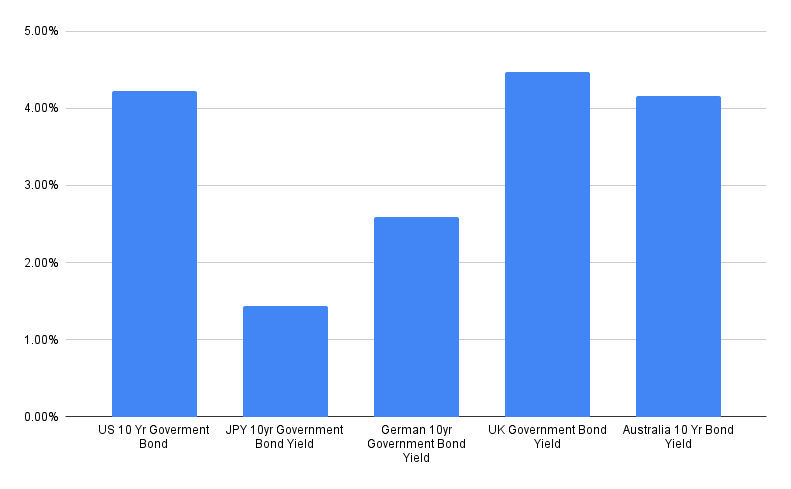
Analyzing 10-year government bond yields across major economies provides valuable insights into comparative economic health and investor sentiment:
- United States: Stable yields reflect confidence tempered with caution as inflation and growth balance.
- Germany: Moderate yields reflect a balanced approach by the ECB, signaling cautious investor optimism about European recovery.
- United Kingdom: Consistently higher yields indicate ongoing inflation concerns, with the BoE’s aggressive stance clearly influencing investor expectations.
- Australia: Yields remain relatively high, driven by resilient commodity markets and positive regional economic forecasts.
- Japan: Continuing its traditionally low-yield environment, Japan maintains an accommodative monetary stance, prioritizing economic support over inflation concerns.
Yield Spread Dynamics: Decoding Investor Sentiment
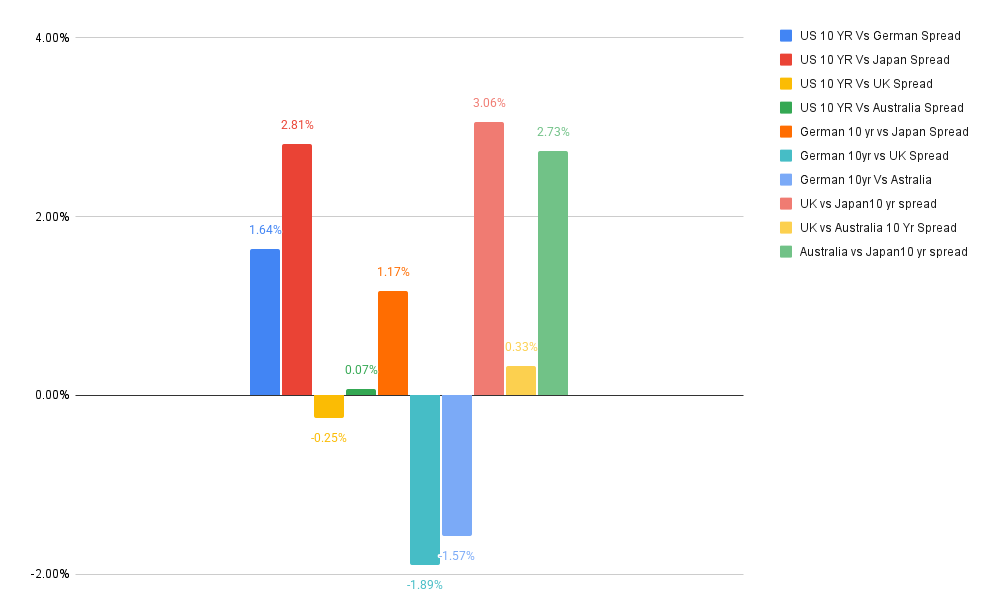
Yield spreads—the difference between bond yields of two different countries—provide critical insights into currency market dynamics and investor risk appetite. Here’s how they shaped up in June:
- Germany vs Japan: A widening spread underscores investor preference for European stability and growth relative to Japan’s ultra-accommodative monetary policy.
- Germany vs Australia: The narrowing spread reflects growing confidence in the Australian economy, closely tied to strong commodity performance and positive Asian market sentiment.
- Germany vs UK: A consistent negative spread highlights greater investor confidence in the UK’s aggressive inflation-management strategy.
- UK vs Australia: Narrow and fluctuating spreads suggest uncertainty between these two relatively high-yielding economies, indicating nuanced investor sentiment.
- UK vs Japan: A persistently wide spread emphasizes continued attractiveness of UK yields compared to Japan’s ultra-low rate environment.
US-centric yield spreads also offered clear signals:
- US vs Australia: A minor spread favoring Australia indicates investor optimism towards Australian economic prospects.
- US vs Germany: Moderate yet shrinking spread suggests improving European economic sentiment relative to the US.
- US vs Japan: Wide spread maintains US bond attractiveness versus Japan, underscoring ongoing carry trade dynamics.
- US vs UK: Narrow and volatile spreads indicate investor indecision between these two robust economies.
Summing Up the June Insights
June’s data highlights cautious global optimism, with central banks carefully balancing inflation and growth. Yield curve normalization in the US provides comfort to markets wary of recession, while global bond yield dynamics reflect nuanced investor sentiment shaped by regional economic conditions.
Understanding these yield and spread dynamics offers traders and investors a critical edge—clarifying market conditions and shaping strategies.
Want the Raw Data and Monthly Updates?
For those interested in diving deeper, Takezo Trading provides the complete data sets behind these analyses. You can purchase the raw data set directly or, better yet, subscribe to my website to receive monthly updates and comprehensive data sets absolutely free.