
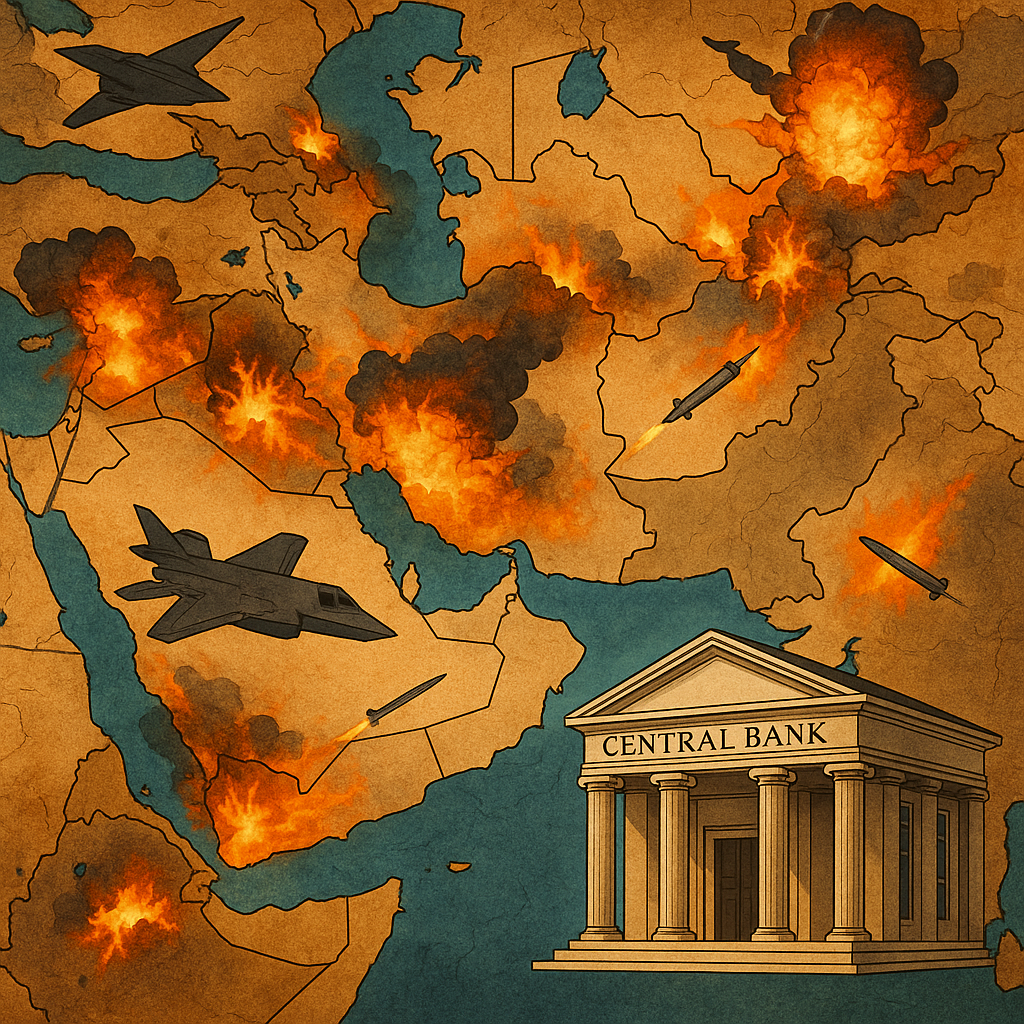
As geopolitical tensions escalate, particularly involving Iran and Israel, the prospect of a US-Iran war increasingly appears inevitable. Understanding past market behaviors in similar scenarios, such as the 2003 US-Iraq war, can equip investors with critical insights into navigating potential disruptions and identifying lucrative opportunities in today’s markets.
Lessons from 2003: Immediate Market Reactions
The 2003 invasion of Iraq initially saw markets adopt a “risk-off” stance, quickly replaced by a sense of relief and confidence as military action unfolded:
- Currencies: The US dollar experienced brief volatility, strengthening initially but then losing ground significantly due to persistent deficits and economic uncertainty.
- Equities: Equity markets initially declined sharply, but quickly rebounded, benefiting significantly from relief rallies when the outcome became clearer, leading to robust gains in sectors directly related to the war effort, such as defense.
- Government Bonds: Yields initially dropped as investors sought safety, then rose sharply, reflecting the unwinding of safe-haven trades as conflict uncertainty diminished.
- Commodities: Oil prices, contrary to expectations, initially fell as immediate supply disruption fears subsided, while gold prices followed a classic “buy the rumor, sell the news” pattern.
Medium-term Opportunities Post-Iraq War (2003-2005)
The aftermath of the Iraq War revealed sustained market opportunities as economic and geopolitical factors played out:
- Currencies: Persistent dollar weakness created opportunities in currency pairs like EUR/USD, which rose significantly, from $1.05 to about $1.34.
- Equities: A new bull market emerged, driven by improving economic fundamentals, defense spending, and global liquidity. The S&P 500 surged by roughly 40% from early 2003 levels by 2005.
- Government Bonds: Gradual normalization in yields offered opportunities in yield-sensitive investments, especially as central banks began tightening monetary policy.
- Commodities: Oil prices surged due to sustained supply constraints and strong global demand, offering significant gains in energy-related investments. Similarly, gold benefited from ongoing dollar depreciation and inflationary pressures.
Predicting Market Opportunities from a 2025 US-Iran Conflict
Given Iran’s strategic geographic position, investors should anticipate even greater market volatility and opportunities than those seen in 2003:
Iran’s Potential Impact on Oil Trade Routes
Iran’s capability to control the Strait of Hormuz, a crucial choke point for global oil supplies, introduces significant risks:
- A blockade or military disruption could immediately spike oil prices dramatically (by $20-$40 per barrel), providing trading opportunities in crude oil futures, energy ETFs, and related stocks.
- Extended disruptions could push prices to $120 per barrel or higher, benefiting energy companies not exposed directly to the Middle East and those capable of ramping up production elsewhere.
Currency Market Opportunities
Expect initial US dollar strength driven by global uncertainty, creating short-term trading opportunities. As the crisis extends, investors should watch for:
- Sustained yen appreciation due to safe-haven flows, offering trading opportunities in JPY crosses.
- Prolonged weakness in EUR and GBP due to energy vulnerabilities, benefiting positions shorting these currencies against safer options.
Equity Markets and Sector-Specific Plays
While overall equities may initially fall, targeted sector opportunities include:
- Defense Stocks: Companies like Lockheed Martin, Northrop Grumman, and Raytheon Technologies are likely beneficiaries.
- Energy Stocks: Firms outside Middle Eastern supply chains and those with robust production capacities elsewhere (e.g., North American shale producers) could significantly outperform.
- Short Opportunities: Industries sensitive to consumer confidence and discretionary spending, such as technology and airlines, are potential short candidates.
Government Bonds and Inflation-linked Securities
- Initial volatility in bonds could provide quick trading gains in safe-haven securities like US Treasuries and German Bunds.
- Persistent oil shocks would enhance opportunities in inflation-linked securities, as inflation expectations could drive yields higher over time.
Macro Investment Considerations
Today’s inflationary pressures, high global debt levels, and tighter central bank policies differentiate this potential conflict from 2003. Investors should prioritize:
- Inflation hedges (e.g., commodities, gold, and inflation-linked bonds).
- Caution towards investments heavily leveraged to global economic growth and discretionary spending.
Geopolitical Risks and Investment Implications
With today’s multipolar geopolitical environment, investor strategies must factor in complexities arising from international diplomatic stances and broader economic sanctions. Investments should reflect awareness of potential escalation scenarios involving global powers like China and Russia.
Conclusion
A US-Iran conflict, likely more disruptive than the Iraq war due to current global conditions and Iran’s strategic assets, presents distinct investment opportunities. Investors who use historical insights, understanding potential market reactions and opportunities arising from geopolitical conflicts, will be better positioned to navigate—and profit from—the turbulence ahead.