War, Gold, and Rising Oil: The Macro Forces Reshaping Currency Markets
By Takezo Trading | 07 March 2026
Estimated Reading Time: 10–12 minutes
Executive Summary — The Battlefield This Week
Currency markets are entering a period where geopolitics, commodities, and monetary policy are colliding in ways that traders cannot ignore. The macro environment has shifted from a relatively stable cycle into one dominated by war risk, inflation pressures, and safe-haven demand.
Several signals across markets point toward a regime that is simultaneously risk-seeking and defensive, a paradox that often appears during the early stages of major geopolitical conflict.
This Week’s Bottom Line
- Primary Macro Driver: Geopolitical escalation following the outbreak of war between the United States and Iran.
- Market Regime: Risk-on but cautious — long-term inflation expectations rising while short-term flows move toward safety.
- Gold vs Fiat: Gold continues to outperform global currencies, signaling capital seeking protection outside traditional fiat systems.
- Energy Shock Risk: Oil prices are rising sharply as the Strait of Hormuz faces disruption.
- Systemic Tension: Markets are adjusting to supply chain disruptions and the potential for a wider regional conflict.
In short: the macro chessboard has changed. Traders must now watch the interaction between commodities, central banks, and geopolitics rather than focusing solely on economic data.
Understanding the Current Market Regime
In calm markets, currencies usually move according to familiar forces:
- Interest rate differentials
- Growth expectations
- Risk sentiment
But during geopolitical shocks, capital flows behave differently.
War tends to produce two distinct phases:
Phase 1 — Flight to Safety
Investors rush toward perceived safe assets:
- Gold
- US Dollar
- Japanese Yen
- Swiss Franc
This phase is driven by fear and uncertainty.
Phase 2 — Inflation and Supply Shock
Once markets begin to price the consequences of conflict, the focus shifts toward:
- Energy supply disruptions
- Fiscal spending
- Inflation expectations
Historically, wars tend to be inflationary in the long run because governments increase spending and supply chains become constrained.
The current environment suggests we are transitioning between these phases.
Gold prices remain elevated while oil is rising — a combination that usually signals both fear and inflation simultaneously.
The Gold Signal: Capital Leaving Fiat
One of the most important signals in global macro today is the continued strength of gold relative to currencies.
Gold’s strength is not just about inflation. It reflects something deeper:
A structural shift in how countries store value.
Several countries are actively increasing their gold reserves while reducing exposure to US Treasury bonds. Major economies such as China and Japan have been increasing gold holdings, reflecting a strategic effort to diversify reserve assets.
For currency traders, this matters enormously.
When gold consistently outperforms fiat currencies, it often indicates:
- Loss of confidence in monetary stability
- Increased geopolitical tension
- A transition toward defensive asset allocation
Geopolitics: The War That Could Reshape Markets
The outbreak of war between the United States and Iran has introduced a new macro risk that markets must now price.
One of the most critical developments is the disruption around the Strait of Hormuz, one of the most strategically important energy chokepoints in the world.
Roughly 20% of global oil supply passes through this corridor.
If shipping through the strait is restricted or closed, the consequences would ripple across global markets:
Immediate Impacts
- Oil price spikes
- Shipping disruptions
- Rising inflation expectations
Medium-Term Impacts
- Increased government spending
- Commodity shortages
- Currency volatility
Long-Term Impacts
- Realignment of trade networks
- Structural inflation pressures
From a macro perspective, this type of conflict tends to favor:
- Commodity currencies in the short term
- Safe-haven currencies during volatility spikes
- Countries with strong energy independence
But the effects are rarely simple.
Higher oil prices can strengthen some currencies while weakening others, depending on whether the country is a net exporter or importer of energy.
The Risk Sentiment Paradox
Markets are currently showing a mixed signal environment.
Pro-Risk Forces
Several factors are supporting risk assets:
- The Japanese carry trade remains attractive due to low Japanese interest rates.
- Global liquidity has not tightened significantly yet.
- Equity markets have not collapsed despite geopolitical tensions.
Carry trades allow investors to borrow in low-yield currencies like the yen and invest in higher-yielding assets.
This creates upward pressure on pairs such as:
- AUDJPY
- NZDJPY
- GBPJPY
Anti-Risk Signals
At the same time, several indicators suggest caution:
- Gold prices remain extremely high
- The VIX volatility index is near 30, signaling market stress
- The Middle East conflict could expand into a wider regional war
This duality explains why markets appear both optimistic and defensive at the same time.
FX Watchlist — The Highest Conviction Setups
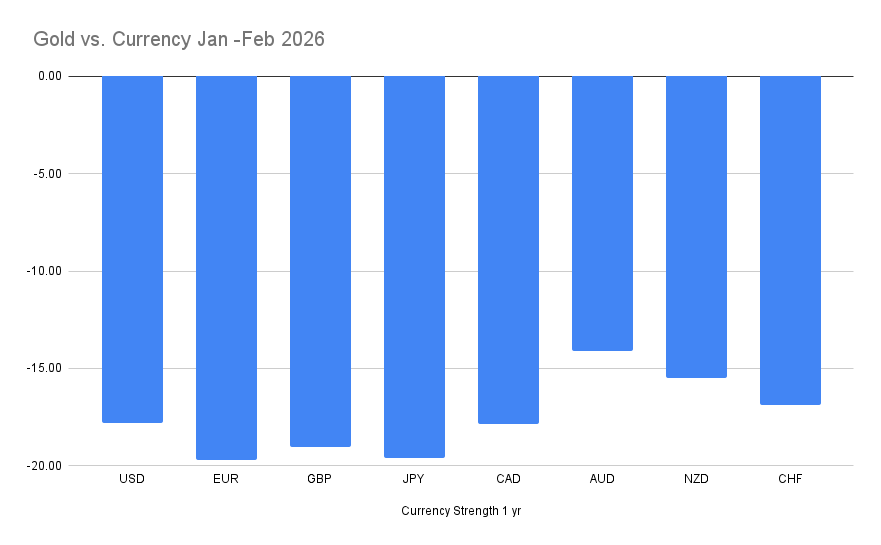
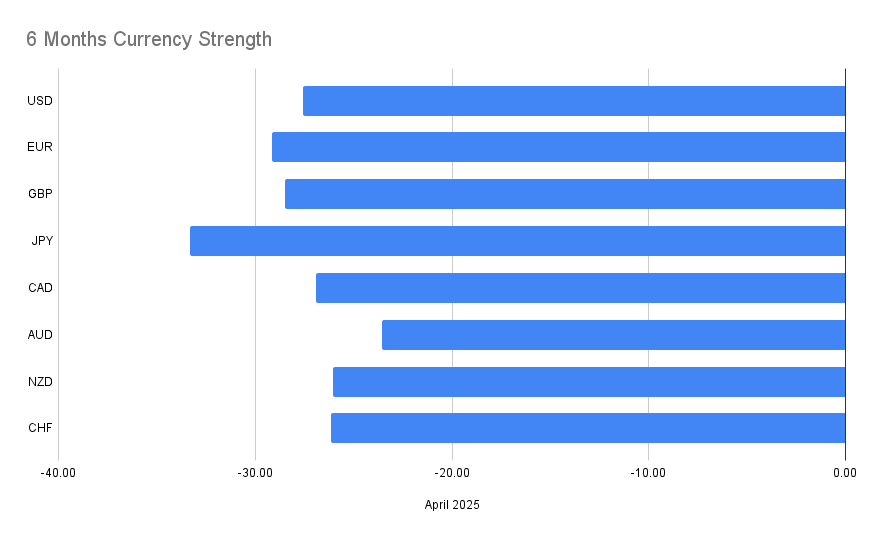
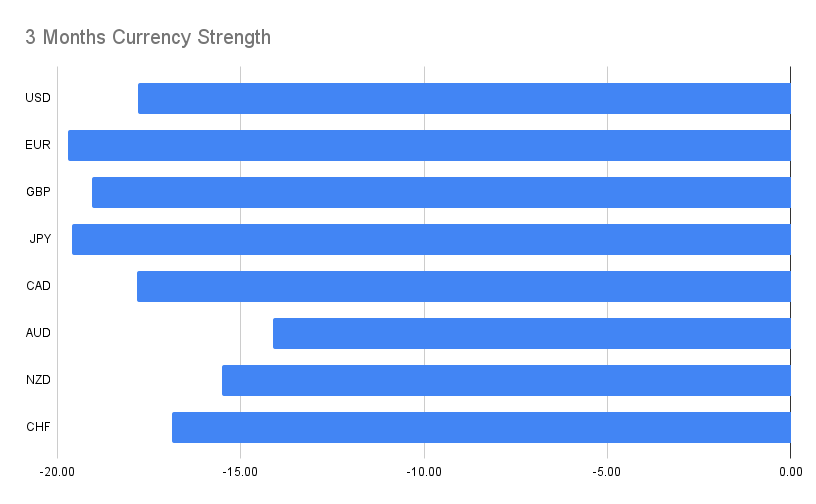
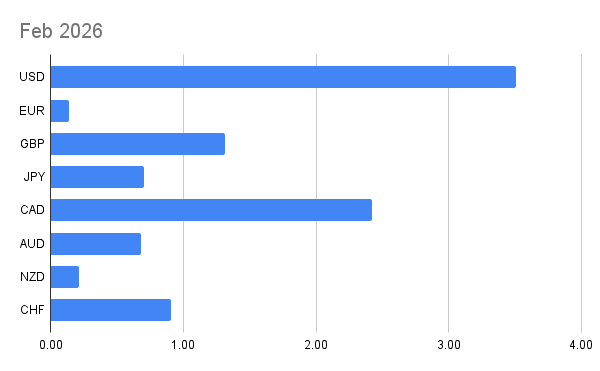
One of the most powerful tools in macro trading is multi-timeframe alignment.
The following setups based on currency relative strength against Gold towards each other, appeared in the same direction across three major timelines:
Trades Appearing on Three Timeframes
- USDCAD — BUY
- EURJPY — SELL
- AUDJPY — BUY
- NZDJPY — BUY
- CADCHF — SELL
.
Trades Appearing on All Four Timeframes
The following pairs show complete alignment across March, 3-month, 6-month, and 2026 so far.
These tend to represent the highest conviction macro themes.
- EURUSD — SELL
- GBPUSD — SELL
- USDJPY — BUY
- EURGBP — SELL
- EURCAD — SELL
- EURAUD — SELL
- EURNZD — SELL
- EURCHF — SELL
- GBPJPY — BUY
- GBPCAD — SELL
- CADJPY — BUY
- AUDNZD — BUY
The dominant theme here is clear:
Euro weakness
Market Snapshot — Cross Asset Signals
Understanding currencies requires watching the entire macro ecosystem.
Currencies rarely move in isolation.
Central Bank Rates
Interest rates remain one of the most powerful drivers of capital flows.
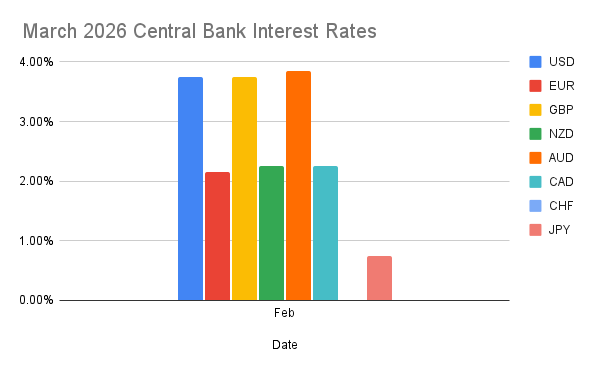
| Currency | Rate |
|---|---|
| USD | 3.75% |
| EUR | 2.15% |
| GBP | 3.75% |
| NZD | 2.25% |
| AUD | 3.85% |
| CAD | 2.25% |
| CHF | 0% |
| JPY | 0.75% |
10-Year Government Bond Yields
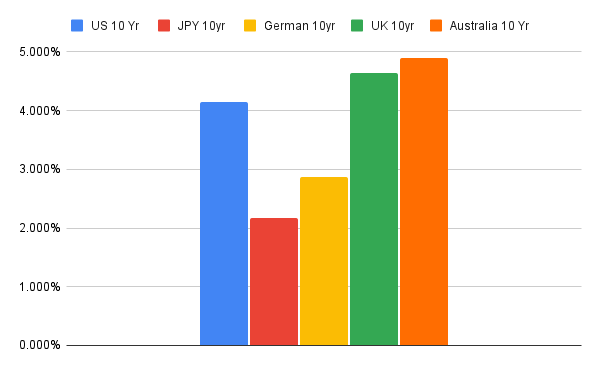
| Country | 10-Year Yield |
|---|---|
| United States | 4.138% |
| Japan | 2.170% |
| Euro Area | 2.864% |
| United Kingdom | 4.641% |
| Australia | 4.888% |
Equity Markets vs Gold
| Index vs Gold | Ratio |
|---|---|
| S&P 500 | 1.30 |
| DAX | 5.30 |
| CAC 40 | 1.80 |
| FTSE 100 | 2.67 |
| Nikkei 225 | 0.068 |
Volatility
The VIX index sits near 29.49, a level that typically indicates elevated market stress.
While not at crisis levels, it signals that traders are preparing for large potential price swings.
Commodities
Gold–Oil Ratio: 56.79
This ratio provides insight into whether markets fear inflation, recession, or geopolitical disruption.
When both gold and oil rise together, it usually indicates:
- Inflation fears
- Supply shocks
- War risk
This aligns perfectly with the current macro environment.
Event Risk — What Could Move Markets
Even in a geopolitically driven environment, economic data can still trigger large currency moves.
The key event to watch this week is US unemployment claims.
US Initial Jobless Claims
- Previous reading: 213k
- Market expectation: 216k
Higher than expected claims:
Negative for the US Dollar as it suggests weakening labor conditions.
Lower than expected claims:
Positive for the Dollar because it signals continued economic resilience.