
The War Regime: Inflation Shock, Carry Trade Risk, and the Fragile Balance of Global Liquidity
By Takezo Trading | 04/04/2026
Reading Time: ~10–12 minutes
This week marks a critical inflection point in global macro. Markets are no longer reacting to isolated data prints—they are repricing an entirely new regime.
This Week’s Bottom Line
- Macro Driver: Geopolitical escalation (USA–Iran conflict) triggering an inflationary supply shock via oil
- Market Regime: Risk-on, but structurally unstable — liquidity remains, but cracks are forming
- Energy Shock: Closure of the Strait of Hormuz is a systemic event.
- Gold Behavior: Consolidation after an extended rally signals.
- Volatility: Elevated (VIX at 23.87) confirms uncertain positioning across risk assets
War is Inflationary
Markets often misprice war in its early stages.
Short-term: uncertainty → volatility
Medium-term: supply disruption → inflation
Long-term: policy tightening → economic stress
We are now transitioning from uncertainty phase → inflation phase.
The closure of the Strait of Hormuz is not just geopolitical theater—it is a global energy choke point. Roughly 20–30% of global oil flows through this corridor. Any disruption here cascades into:
- Higher transportation costs
- Rising production costs
- Sticky inflation globally
This is not theoretical. It is already being priced.
Understanding the Battlefield
Pro-Risk Forces
- Liquidity still present in markets
- Carry trades remain active (for now)
- Traders positioning for continuation of trends
However, this “risk-on” environment is fragile.
Anti-Risk Forces
- Elevated gold prices (safe haven demand persists)
- VIX at 23.87 — volatility is not low
- Expanding Middle East conflict involving major global players
This creates a dual-regime environment:
Markets are participating, but not confident.
The Japanese Carry Trade
This is where things get dangerous.
Japan is heavily dependent on imported energy. With oil supply disrupted:
- Energy costs surge
- Inflation rises domestically
- Pressure builds on the Bank of Japan to tighten
If BOJ raises rates:
→ The carry trade unwinds
→ Global liquidity contracts
→ Risk assets sell off
This is the silent trigger most traders are not fully pricing.
FX Watchlist — High-Conviction Setups
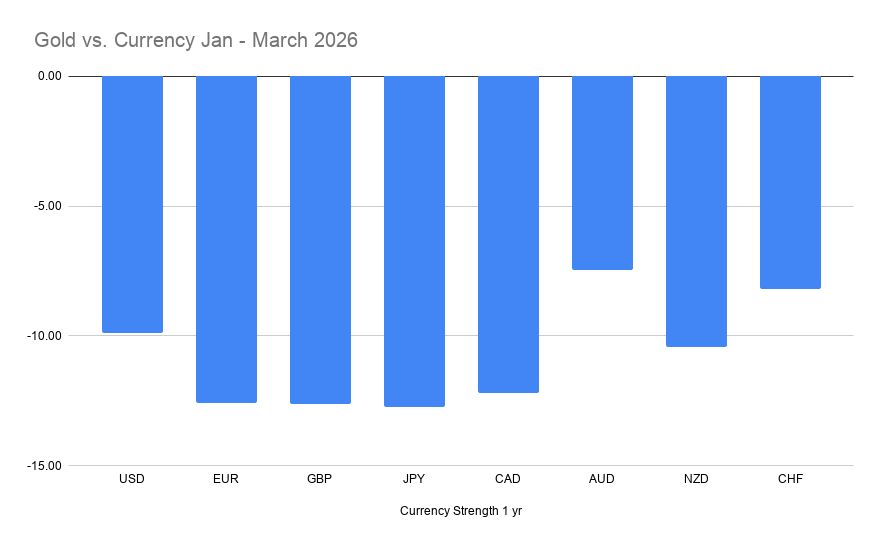
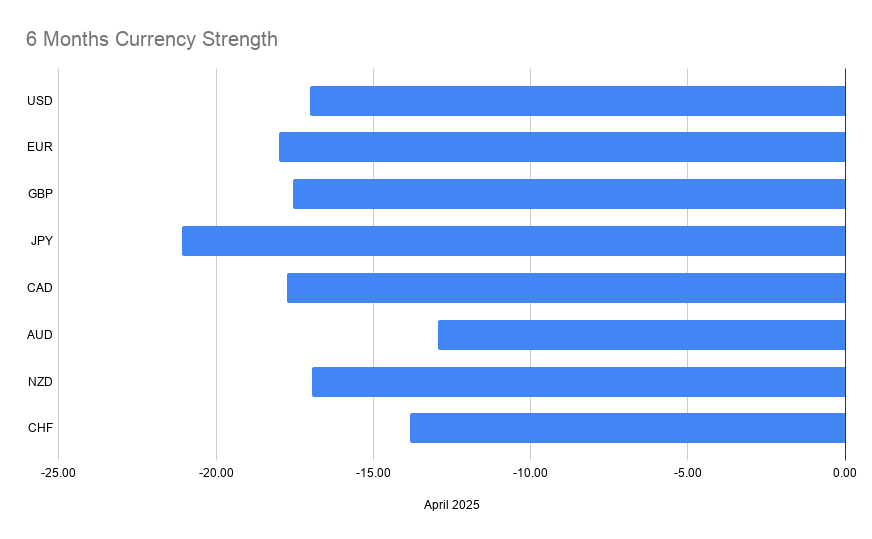
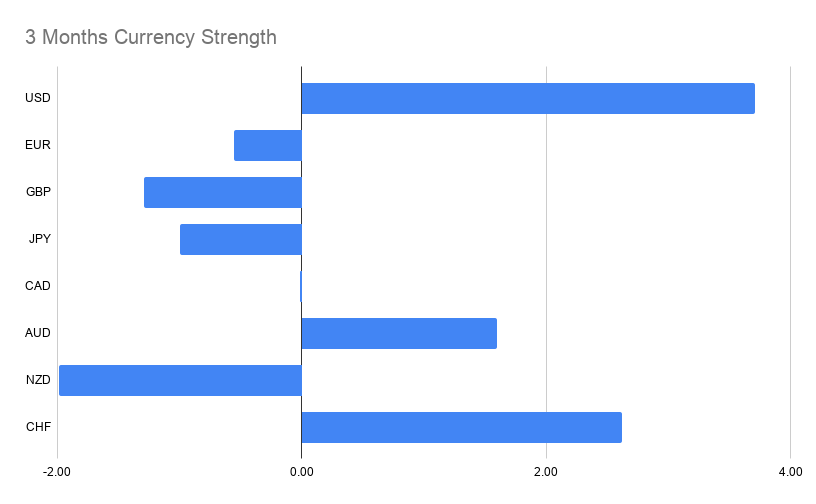
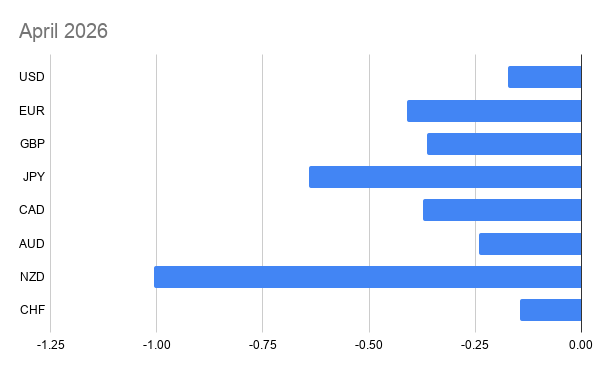
Trades Aligned Across ALL 4 Timeframes
- EURUSD – SELL
- GBPUSD – SELL
- USDJPY – BUY
- USDCAD – BUY
- NZDUSD – SELL
- EURJPY – BUY
- EURCAD – SELL
- EURAUD – SELL
- GBPAUD – SELL
- GBPCHF – SELL
- CADJPY – BUY
- AUDJPY – BUY
- CHFJPY – BUY
- AUDCAD – BUY
- CADCHF – SELL
- AUDNZD – BUY
- NZDCHF – SELL
Trades Aligned Across 3 Timeframes
- USDCHF – SELL
- EURCHF – SELL
- GBPJPY – BUY
- AUDCHF – BUY
Interest Rates (Policy Landscape)
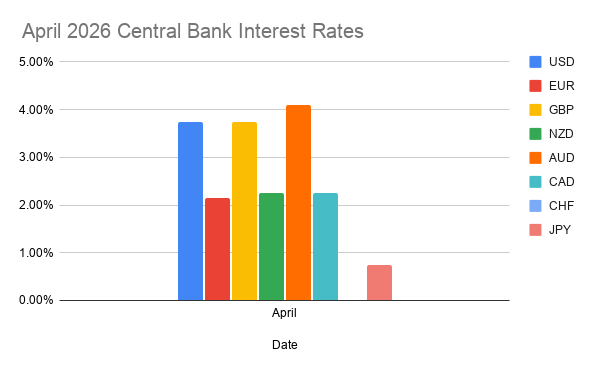
- USD: 3.75%
- EUR: 2.15%
- GBP: 3.75%
- AUD: 4.10%
- NZD: 2.25%
- CAD: 2.25%
- CHF: 0%
- JPY: 0.75%
10-Year Bond Yields
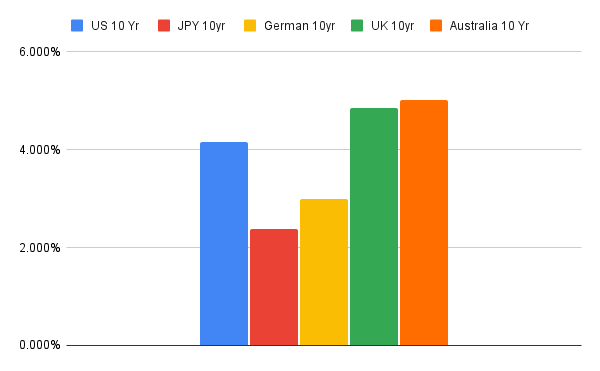
- USD: 4.309%
- GBP: 4.851%
- AUD: 5.010%
- EUR: 2.996%
- JPY: 2.382%
Equities vs Gold (Risk Appetite Gauge)
- S&P 500 vs Gold: 1.41
- DAX vs Gold: 5.71
- Nikkei vs Gold: 0.071
Volatility
- VIX: 23.87
Commodities
- Gold/Oil Ratio: 41.77
Macro Deep Dive — The Inflation Chain Reaction
Here is the sequence currently unfolding:
- War disrupts oil supply
- Oil prices rise
- Inflation expectations increase
- Central banks forced into tighter policy
- Liquidity contracts
- Risk assets reprice
We are currently between steps 2 → 3.
Markets are not yet pricing steps 4–6.
That is where opportunity lies.
What Can Break the Market
Tier 1 Risks
- Escalation of USA–Iran conflict
- Further disruption in oil supply
- Central bank policy shifts (especially BOJ)
- Inflation data surprises
COT Positioning
For deeper positioning insight:
https://takezotrading.com/commitment-of-traders-update-april-4th-2026/