

Week of 5 July 2026
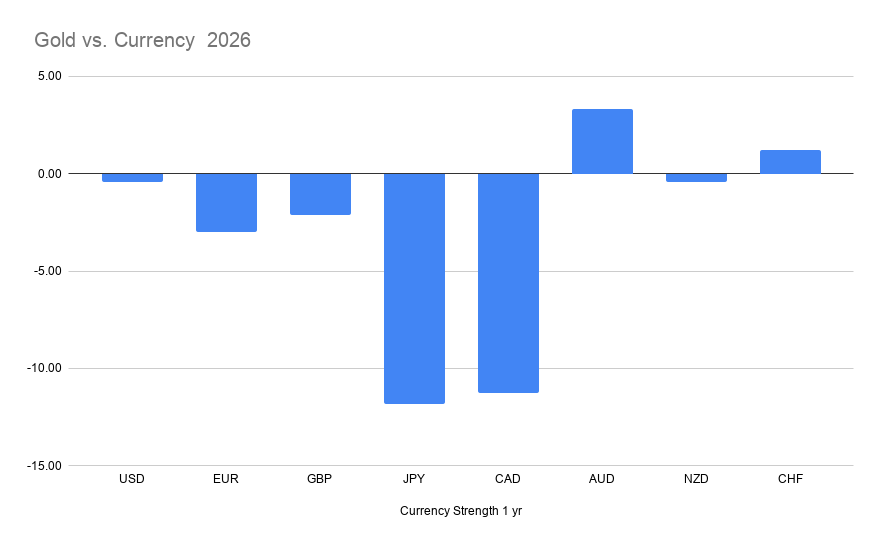
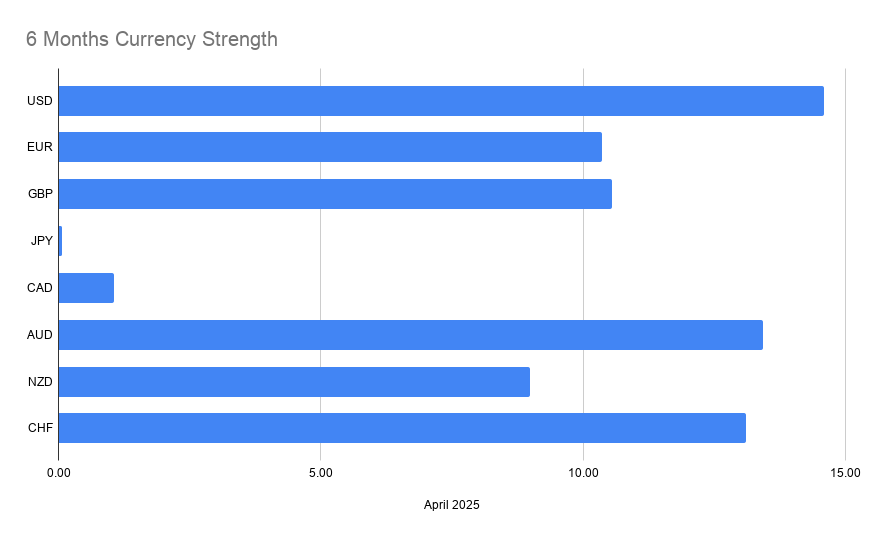
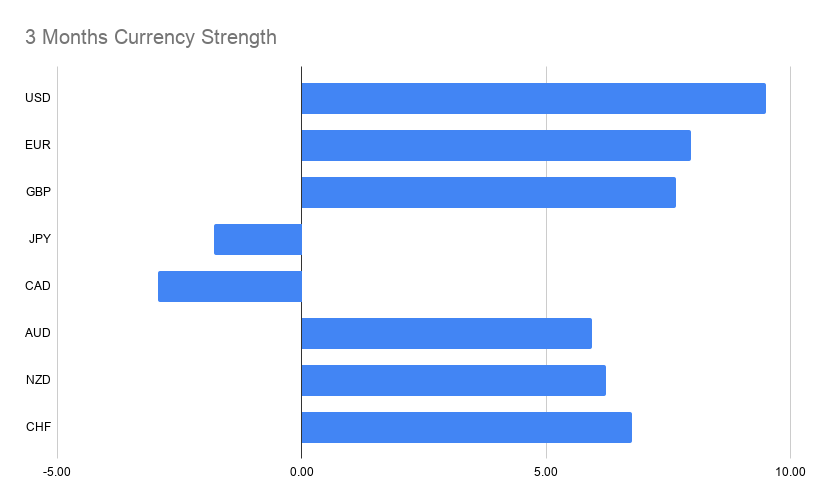
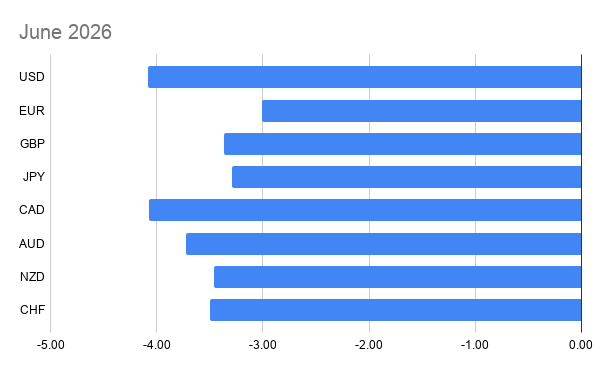
The method is the same as always. Each currency is measured against gold as a common yardstick across four timeframes — 1-Year (2026), 6-Month, 3-Month, and the current month (July). Comparing each currency’s strength against every other gives the pair direction; gold simply drops out of the comparison. The stronger currency is the one we buy, the weaker one is the one we sell. Nothing else is factored in — pure relative strength, in standard FX quoting.
Below are two lists: pairs that line up the same way across all four timeframes (highest conviction), and pairs that line up across three of the four.
CONFIRMED ACROSS ALL 4 TIMEFRAMES
The theme this week is the Canadian dollar. CAD is the weakest currency in every single window, so the cleanest trades are long everything against the loonie. EUR/JPY is the one clean non-CAD signal — the euro sits above the yen across all four timeframes.
- EUR/CAD — Long
- GBP/CAD — Long
- AUD/CAD — Long
- NZD/CAD — Long
- CAD/CHF — Short
- EUR/JPY — Long
CONFIRMED ACROSS 3 OF 4 TIMEFRAMES
Nearly every pair here breaks on the July chart. July is tightly compressed this week — all eight currencies bunched into a narrow band — and the yen is unusually firm in that window, which is what knocks the yen longs and the dollar setups down a tier. On the longer horizons these remain well aligned; only the single July snapshot dissents. EUR/NZD is the lone exception, breaking on the 1-Year instead.
- USD/CAD — Long (breaks on July)
- GBP/JPY — Long (breaks on July)
- AUD/JPY — Long (breaks on July)
- NZD/JPY — Long (breaks on July)
- USD/JPY — Long (breaks on July)
- CHF/JPY — Long (breaks on July)
- EUR/USD — Short (breaks on July)
- GBP/USD — Short (breaks on July)
- NZD/CHF — Short (breaks on July)
- EUR/NZD — Long (breaks on 1-Year)